Service
Shopify B2B developer for wholesale portals, with or without Plus
A Shopify wholesale portal is a store, or part of one, where only approved companies can buy, each with its own catalog, prices and payment terms. Nicolás Mateos, a freelance Shopify developer based in Madrid, builds these portals on Shopify's native B2B features and a theme adapted to wholesale ordering: variant order tables, volume-tier pricing and prices that only customers can see.
Front-end for B2B storefronts with over €36M in combined annual GMV.
What does Shopify B2B include?
Shopify B2B is the set of native features for selling to businesses from the same Shopify admin. As of October 2026 it is available on the Basic, Grow, Advanced and Plus plans, not on Starter or Retail (Shopify documentation). These are its building blocks:
- Companies and locations: each wholesale customer is a company with one or more locations, its buyers and its addresses.
- Catalogs: which products are published to B2B customers and at what price, each with its own price list.
- Quantity rules: minimum, maximum and increment per variant, for example cases of 6.
- Volume pricing: a lower unit price from a given quantity.
- Payment terms: net 30, 60 or 90 days instead of paying at checkout.
Can you do B2B on Shopify without Plus?
Yes. Since April 2, 2026, the Basic, Grow and Advanced plans include native B2B features at no extra cost (Shopify changelog). There are limits: as of October 2026, this is how they compare with Shopify Plus.
| B2B feature | Basic, Grow and Advanced | Shopify Plus |
|---|---|---|
| Companies, buyers and locations | Yes | Yes |
| Active B2B catalogs | Up to 3 in total, assigned to B2B markets | Unlimited |
| Assign a catalog directly to a company or location | No | Yes |
| Payment terms, quantity rules and volume pricing | Yes | Yes |
| Deposits and partial payments | No | Yes |
| Contextual checkout and storefront per market | Advanced only | Yes |
| Custom apps with Shopify Functions | No | Yes |
Three catalogs fit, for example, three price tiers (distributor, retailer and professional), but not a price negotiated with each customer: that needs catalogs assigned to each company, which only Plus allows. Outside Plus, B2B catalogs also require the store to use new Shopify Markets (B2B features by plan).
What fits in three catalogs, and when moving to Plus pays off, is covered in more detail in the article Shopify B2B without Plus.
Who is this service for?
Brands that sell to shops, pharmacies or distributors and want wholesale orders to come in through their Shopify store, with the catalog and prices each customer is entitled to. It fits best when the store already has a theme you want to keep: Émolo's portal was built on Prestige and Vidal & Vidal's on Sleek.
It is not for you if you only need to switch on native B2B without changing the theme, since that is configured in the admin with no code. Nor if the project is mainly an ERP integration: there I work on the front end alongside a backend team.
What does a wholesale portal include?
- Native B2B setup: companies, catalogs, price lists, quantity rules and payment terms.
- Prices, stock and buy buttons for company buyers only, decided in Liquid so prices never reach the HTML of someone who is not a customer.
- A variant order table (sizes, colours or formats) kept in sync with the cart on product pages, collections and search.
- Volume-tier pricing shown in the header, product page and cart, with thresholds in a metafield the client edits.
- Retail price next to the wholesale price, SKU search and a list view for repeat orders.
- Badges, colours and portal content managed from the admin with metafields and metaobjects, with no theme release for each change.
Three of these pieces, with annotated code (full boxes at checkout, a quick order in a single request and a location picker), are on the code page.
How long does a wholesale portal take?
Between two and eight months. What moves that range is not the design: it is how many rules the portal has to understand.
At the short end are the ones that need to decide who may buy, serve the right catalog and take orders by size or format. Vidal & Vidal was ready in about two months, and Émolo went the same way: a simple variant table, no volume tiers.
From there, every new rule adds up. A portal with tens of thousands of SKUs, strict stock control, tiered prices with quantity steps, replenishment, buyer and agent roles and two carts running at once is not the same project: Ewheel has taken seven or eight months and is still going, with a backend team working on the same store. Most projects land in between, from four months upwards.
And a warning I would rather give before we start than after: of the time that gets lost along the way, 30 to 40% sits on your side. It goes on waiting for the real price lists, on deciding which company belongs to which tier, and on validating stock. Bring that settled and the portal lands at the low end of the range.
B2B portals I have built
B2B Wholesale Portal Shopify B2B
Émolo B2B
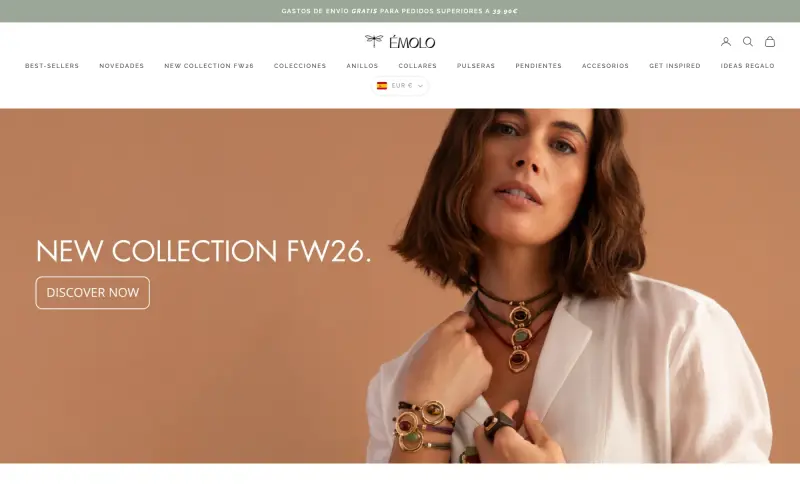
Émolo is a handmade jewelry brand from Murcia, Spain. Its wholesale portal was built in 2026 as a separate store, on the same Prestige theme as its B2C storefront: only company buyers see prices and can buy, and they order every size of a piece from one table that stays in sync with the cart.
Read the full case study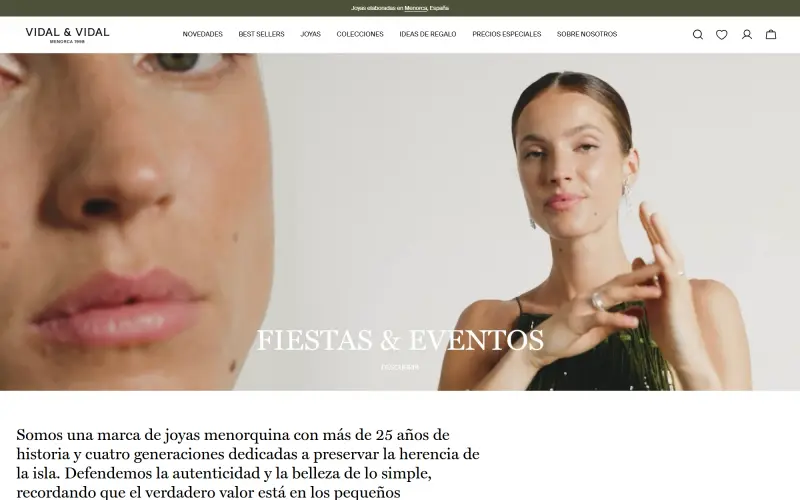
B2B Wholesale Portal Shopify Plus
Vidal & Vidal B2B
Vidal & Vidal is a jewelry house from Menorca, Spain. Its Shopify Plus wholesale store started as an export of the consumer store's Sleek theme with no B2B logic in it: first 29 orphaned templates were removed, 75% of the templates folder, and then Émolo's order table was ported to the theme.
Read the full case study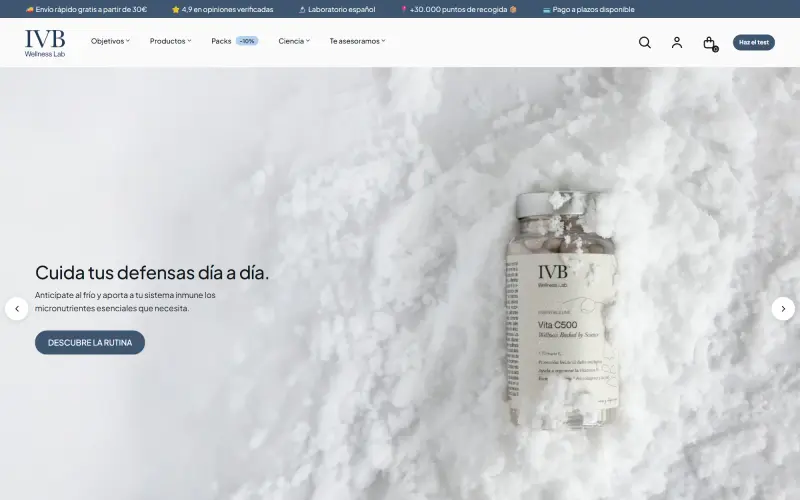
B2B Pharmacy Portal Shopify B2B
IVB Wellness B2B
IVB Wellness Lab is a Spanish supplements lab stocked in more than 3,000 pharmacies. Its B2B ordering portal was built in 2026 on the Enterprise theme from the brand's Figma designs: pharmacies buy on volume tiers, see their tier across the store, and the client changes the thresholds from the admin.
Read the full case study
More B2B portals, with their entries on the projects page: MT Helmets, Ewheel and Hifas da Terra.
Shopify B2B FAQ
Can I run B2B and B2C in the same Shopify store?
Yes. Shopify B2B runs in the same store as direct-to-consumer sales: a buyer who logs in for a company sees that company's catalog, prices and terms, and every other visitor sees the usual store. The other option is a separate wholesale-only store, which is what Vidal & Vidal has.
Do I need a Shopify developer to turn on B2B?
Not to turn it on: companies, catalogs and payment terms are configured in the admin. You need a Shopify developer when the theme has to change for wholesale buyers, for example to order several sizes at once, hide prices from non-customers or show the volume tier across the store.
Can prices be hidden from people who are not customers?
Yes, and the safe way is not to send them. On Émolo's portal, a Liquid predicate on customer.b2b? decides whether prices, stock and the buy button are rendered, so a visitor without a company account receives no price in the HTML. Hiding them with CSS or JavaScript is not enough, because they are still in the page source.
What changes for B2B if my store moves to Shopify Plus?
Mostly per-customer pricing: on Plus you can have unlimited catalogs and assign them directly to each company or location, and you can require deposits and accept partial payments. You can also use custom apps with Shopify Functions, for example to validate a minimum order per company at checkout.
How much does a Shopify wholesale portal cost?
I quote a fixed price per project, plus a block of hours for maintenance afterwards. The fixed price comes out of the list of rules that have to be built, so writing that list is the first thing we do.
For a sense of scale: the most complex portal I have worked on has taken over a hundred hours of front-end work alone, and I was one of several people, with a separate backend team. One with company access, catalogs and a simple variant table sits in a completely different bracket.
What moves the number most is the plan, and not because of Shopify's fee: without Plus you are capped at three active catalogs, so your whole price structure has to fit inside them. With Plus you can have dozens of catalogs and cross them with Markets, and that changes the entire project, not just the invoice.
The four factors that decide a quote, and how to compare two that look nothing alike, are in how much a Shopify B2B portal costs.